Author: Alex Heshmaty
Alex Heshmaty is technology editor for the Newsletter. He runs Legal Words, a legal copywriting agency based in the Silicon Gorge. Email alex@legalwords.co.uk.

Using tech to defeat Covid-19
Alex Heshmaty asks Joanne Frears, partner at Lionshead Law, and Will Richmond-Coggan, partner at Freeths, about the implications of various emergency measures being taken by the government in the fight against Covid-19 – many of which are enabled by technology. How tech is being used AH. How is technology being used by states in the […]
Read More

Will the Covid contact tracing app work?
The UK Government launched the NHS Test and Trace service on 28 May 2020 in England and Scotland, with Wales following on 1 June; Northern Ireland already has its own system. However, there is one glaring omission: the smartphone app. Although initially there was much fanfare about the production of an app by NHSX to […]
Read More
Social media distancing
2003 marked the dawn of mainstream social media, with MySpace and LinkedIn both launching the same year and Facebook hot on their heels in 2004. Since then, social media (or “social” for short) seems to have permeated every aspect of our culture and daily lives, simultaneously bringing people closer together and driving them further apart. […]
Read More
Face masks and automated facial recognition
There has been a lot of debate about the thorny issue of automated facial recognition in public spaces (see Internet Newsletter for Lawyers, October 2019). Much of the criticism has been levelled at the spectre of surveillance creep and the danger of creating a Big Brother state (which has arguably already happened in China with […]
Read More
How healthy is your data?
Can technology improve our health and transform healthcare? A whole panoply of tech companies are working on a range of products and services which aim to answer these questions in the affirmative. The burgeoning industry which has been dubbed “medtech” has already led to some fascinating (and controversial) partnerships, perhaps most notably involving Google Deepmind […]
Read More
Divergence from EU: Copyright Directive
The government recently indicated a willingness to diverge from EU regulations post-Brexit. Perhaps one of the more significant moves in this direction is the announcement by Universities and Science Minister Chris Skidmore that the UK will not implement the controversial EU Copyright Directive. The main criticism levelled at the directive was down to Article 17* […]
Read More
Divergence from EU: facial recognition
It was recently reported that the European Commission (EC) was considering a temporary ban on the use of facial recognition technology in public places. A draft white paper on artificial intelligence had reportedly stated that the “use of facial recognition technology by private or public actors in public spaces would be prohibited for a definite […]
Read More
Establishing trust online
“I read it on the internet” has become a phrase which often generates mockery and epitomises gullibility or naivety about the online world. In the 1950s science fiction writer Theodore Sturgeon proclaimed that “ninety percent of everything is crud” which came to be known as Sturgeon’s Law. One can only speculate as to how Sturgeon […]
Read More
News publishers questioned about data deals with Google
As part of an investigation by the European Commission into the effect of data collection practices by Facebook and Google upon competition, news publishers have been sent detailed questionnaires regarding data sharing agreements with Google. In particular, the questionnaires seek details from publishers on ways in which the search engine behemoth uses data collected from […]
Read More
Content moderation oversight board proposed by Facebook
Social media companies have traditionally argued that they are merely internet platforms as opposed to publishers with the ensuing editorial responsibilities (despite the odd court case where it has been to their advantage to hold themselves out as publishers). But in the face of increasing public controversy about malicious content plaguing social media sites, the […]
Read More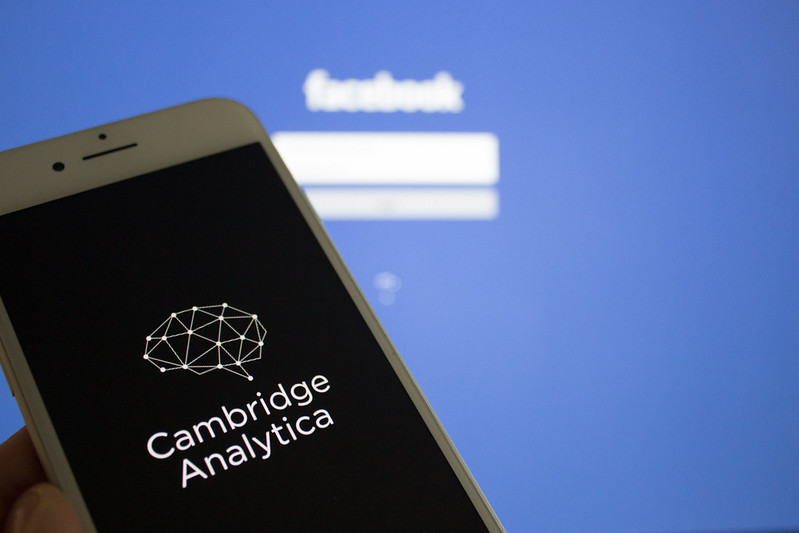
What is data misuse?
Data misuse is often discussed alongside cybersecurity, within the overall context of data protection; but it is important to make the distinction between data which has been obtained legitimately but misused and data which has been collected illegally (eg without consent) or stolen (via computer hacking). Data theft generally involves a cyberattack or harvesting of […]
Read More
California passes landmark gig economy rights bill
The rise of the gig economy and zero hours contracts – often facilitated by the internet and apps such as Uber, Deliveroo and Limber – has been the subject of vigorous debate over recent years. Governments across the world have been grappling with the implications for employment law and wider society, balancing the boost to […]
Read More